Find Me At Screen Rant

Showing posts with label Tarantino. Show all posts

Tuesday, July 30, 2019

Once Upon a Time... in Hollywood

ONCE UPON A TIME... IN HOLLYWOOD

** SPOILERS **

Quentin Tarantino's Once Upon a Time... in Hollywood is a vivid dream of a Tinsel Town that existed once - not quite like that - but we wish it did. A lovingly detailed, freewheeling immersion into the 1969 Los Angeles of Tarantino's memories and desires, Once Upon a Time... is also the most genuinely endearing of the nine feature films he's directed. In fact, not only does Tarantino persuasively recreate the era of 1969 Hollywood, complete with the sights and the sounds of an epic soundtrack, but by the end, Tarantino shockingly does reality one better and saves Sharon Tate (Margot Robbie) from the tragic fate that would befall her in real life.

In Once Upon a Time... in Hollywood, Leonardo DiCaprio stars as Rick Dalton, an actor immensely worried about his place in the burgeoning New Hollywood movement. Rick was the star of a 1950s cowboy show called Bounty Law but he quit to go into the movies, only to get passed over for the lead role in The Great Escape. The guy who got the part? Steve McQueen - something that rankles Rick to this day and partly drove him to alcoholism and endless anxiety. Rick gets a rundown of his career from his agent Martin Schwarz (Al Pacino), who suggests the cure for his career troubles is to spend six months in Rome shooting spaghetti westerns. This confirms it for Rick: "I'm a has-been!" he moans to his best friend and stuntman Cliff Booth (Brad Pitt); Cliff calmly replies, "Don't cry in front of the Mexicans."

Honestly, Rick's not doing so badly. He may no longer be a star but he's a working actor who wisely invested in a nice home in the Hollywood Hills. But he gazes longingly at the house right above him on the hill, which is now owned by Roman Polanski, the director of Rosemary's Baby, and his wife Sharon Tate. If Polanski would just cast Rick in one of his movies, that would be his ticket to movie stardom but alas, he's never met his neighbors. Instead, a hungover Rick goes to his guest spot on a pilot for a Western called Lancer, where all of his anxieties rise up. Rick meets Trudi (Julia Butters), an 8-year-old actor who's wise beyond her years and gives him a better peptalk than any adult he knows. When Rick musters up his talent and wows the cast and crew of Lancer, Trudi rewards him with praise he's been longing for: "That was the best acting I've ever seen in my whole life." Better than any five-star review in the papers, Rick's heart is buoyed and he's "Rick fuckin' Dalton" again. With Rick's arc, Tarantino creates perhaps his most endearing lead character; Dalton may be a drunk and temperamental, but thanks to DiCaprio baring Rick's heart to us, he's someone we truly root for.

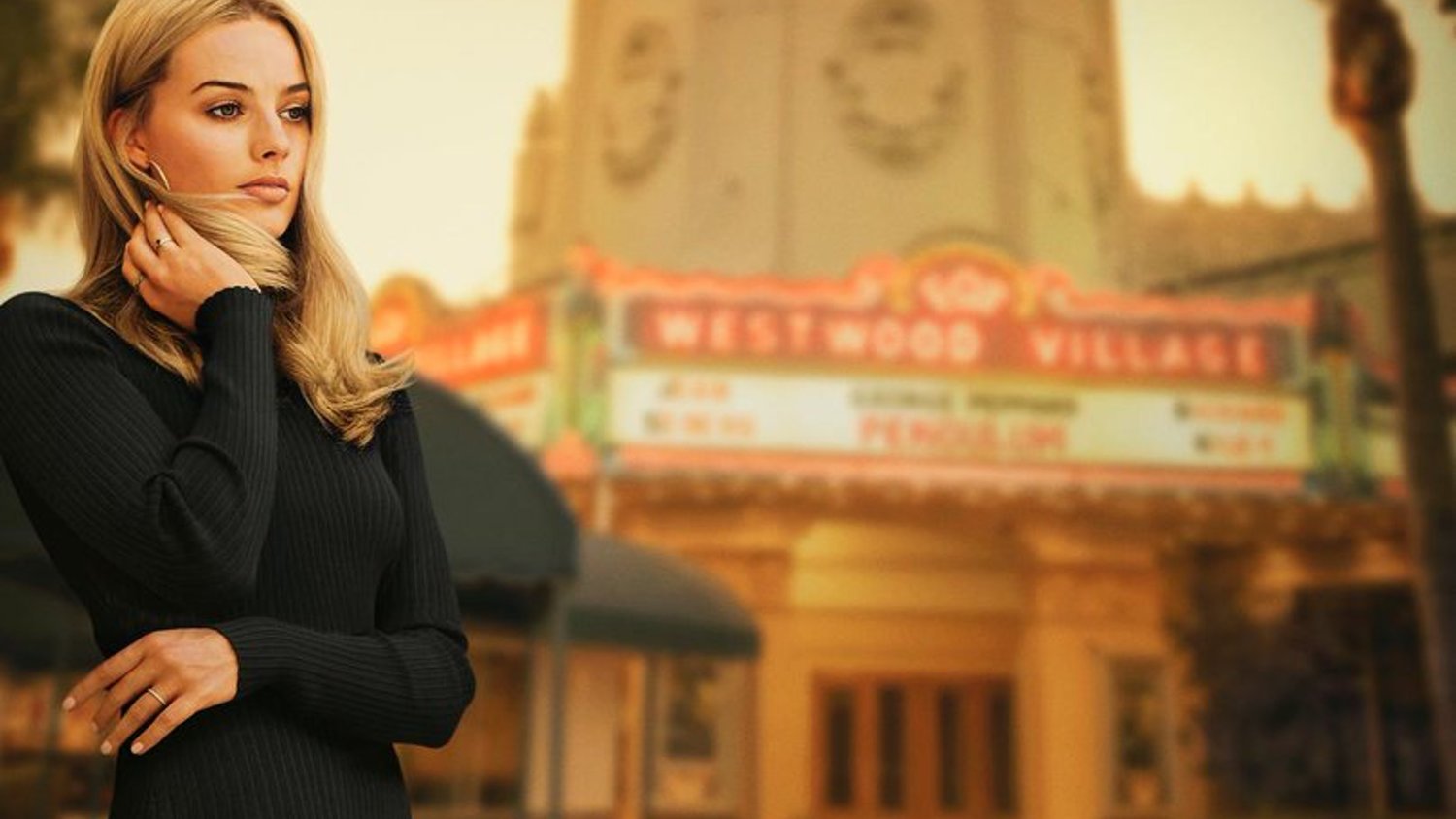
Meanwhile, Tarantino pulls a more subtle trick with Sharon Tate; without anywhere close to the amount of dialogue Rick gets, Tarantino's camera follows Sharon through some of her adventures, like partying at the Playboy Mansion. The next day, Sharon goes to Westwood Village to buy a book and she decides to go to the movies to watch herself in The Wrecking Crew with Dean Martin. With her bare feet up on the chair in front of her (Tarantino's foot fetish is on full display in this film), Tate listens delightedly as the audience cheers and laughs at all the right places. Purely through her performance, Robbie makes Tate as endearing as Rick Dalton, and we get a pit in our stomach dreading what is bound to happen to her according to history.

While all that's going on, however, Cliff Booth goes on his own adventure. The stuntman is shunned by the Hollywood community because he's known as "the guy who killed his wife and got away with it". (Whether he did or not is up to the audience to believe.) Hence, Cliff sticks close to his buddy Rick and is satisfied being his driver and gofer, despite his poor career prospects. While Rick is shooting Lancer, Cliff picks up a hippie chick named Pussycat (Margaret Qualley) he's seen hitching around Hollywood Boulevard. Decades older than her, Cliff knows enough not to do anything that'll land him in jail. Besides, his stuntman sense starts tingling when she says she and "others like her" live in Spahn Movie Ranch, where Cliff worked as a stuntman 8 years ago.

At Spahn Ranch, Cliff unwittingly discovers the Charles Manson Family, though he escapes unharmed never realizing who and what they are. One of the most intense set pieces in the film, the Spahn Ranch sequence also pays off the lecture Rick's agent gives him earlier: Schwarz gives Rick a breakdown on how audiences perceive an actor based on the choice of roles they take. At Spahn Ranch, it all comes into focus: the audience knows and sees Brad Pitt is a movie star so, even though he's surrounded by hippies and in danger, the audience never doubts Cliff could whoop those hippies' asses. And that comes to pass in the film's finale.

In real life, the Manson Family breaks into Sharon Tate's home on Cielo Drive and murders her as well as her three friends staying there. Once Upon a Time... in Hollywood brings events right up to the precipice of that grisly tragedy and then inserts an X-factor the real world didn't have: Rick Fuckin' Dalton! In a brazenly bravura action sequence, a very inebriated Dalton and a very high-on-acid Cliff run afoul of the four hippies Manson sent to kill Tate and violently dispatch the hapless interlopers while reaffirming their tried-and-true friendship.

Thus, Quentin Tarantino rewrites history for the better because in his universe, one of the seminal tragedies of 1969 Hollywood never occurred, while he simultaneously reaffirms the power of movie stars. What's more, Dalton's Old Hollywood ended up saving the life of Tate's New Hollywood, while never quite realizing he did so. At the end of Once Upon a Time... in Hollywood, Rick finally meets his next-door neighbor Sharon, opening the gate to possibly getting his dream role in a Roman Polanski picture. With that, Quentin Tarantino closes out his fantastic and fantastical dreamland version of 1969 Hollywood - one of his all-time best films - on an unexpectedly uplifting note of hope.

Wednesday, January 2, 2013

Django Unchained

DJANGO UNCHAINED

** SPOILERS **

Django Unchained, Quentin Tarantino's rollicking, shameless, blood-soaked pulp spaghetti western about slavery, once again delves into the sort of revisionist history Tarantino began with Inglorious Basterds. Jamie Foxx stars as the title character Django, a former slave turned freedman turned bounty hunter, though Foxx, cool and often as silent as the "D" in "Django", almost melds into the background for much of the film. As does the film's multi-act structure, which really more or less breaks down into the following: The Christoph Waltz Show, The Waltz and Jaime Foxx Show, The Waltz and Leonardo DiCaprio Show, The Samuel L. Jackson Show, and finally The Jaime Foxx Gets To Kill Everyone Show.

Waltz, Tarantino's Oscar winner for his turn as the Nazi Hans Landa in Inglorious Basterds, dominates the early part of Django Unchained. As slavery-hating German dentist turned bounty hunter Dr. King Schultz, Waltz loquaciously frees Django from captivity and indoctrinates him has his new bounty hunting partner. Django, naturally the quickest draw in the West, now "gets to kill white folks and get paid for it". Schultz quickly learns "the kid is a natural". Shultz and Django go about their schemes by role playing "characters", complete with multiple visits to haberdasheries, such as when they pay a visit to Ku Klux Klan leader Don Johnson to collect on three bounties and then massacre the Klan trying to kill them. Slowly but surely, after copious amounts of blood is spilled and corpses of racist white people litter the dusty plains of Texas and Tennessee, the greater arc of Django reveals itself: Shultz and Django make a pact to free Django's beautiful wife Broomhilda (Kerry Washington), the only slave woman who can speak German, from the clutches of Mississippi plantation owner and "seasoned slaver" Calvin Candie (DiCaprio). 

Their gambit to rescue Broomhilda is fiendishly over-complicated in its intricacies: involving Schultz pretending to be a wealthy German investor interested in paying a "ridiculous amount" of money ($12,000) for one of DiCaprio's slaves who fights in "Mandingo Games". (The unnecessary complications of this plan is highlighted later when, after DiCaprio and Jackson uncover the ruse, the legal arrangement is simply made for Shultz to buy Broomhilda directly for the $12,000.) The latter half of Django is a battle of wits and sheer acting chops between Waltz and DiCaprio, but the winner is Jackson, who completely steals scenes by hilariously pretending to be DiCaprio's loyal house ni- uh, consigliere, but is secretly the longtime brains and fearsome power behind the egotistical DiCaprio. Finally, after a couple of bloody and explosive shootouts, Django is unleashed and gets to murder all the evil, racist, slave-whipping white people left in the movie, and also Jackson, riding off into the sunset with Broomhilda.

While the N word is dropped constantly throughout (and much ado is made by the white characters who see Django riding a horse), Django Unchained takes a much more withering view of those very racist white people, who all meet inglorious ends, usually via their heads exploding into bloody gushing geysers thanks to Django and Schutz's hand cannons. Quentin Tarantino himself cameos as an Australian slave driver and gets to be personally dynamited into Quentin bits by Django, sharing the fates of the despicable white characters that sprang from his imagination. "Why don't they just rise up and kill us?" DiCaprio muses about slaves over dinner, but that idea had long crossed Shultz and Django's minds, even before DiCaprio launched into a hardly scientific analysis of the "submissive" sections of black people's brains. Characters like DiCaprio are clearly presented as despicable, so much so that the act of shaking DiCaprio's hand is the straw that breaks the camel's back for Waltz, with fatal consequences for everyone involved. If anything, Django Unchained is probably about 20 minutes too long, which would equate to about 11 fewer white folks being dead, but then every single dead white person in the movie deserved what they had coming to them.

Friday, August 21, 2009

Inglourious Basterds (***)

INGLOURIOUS BASTERDS

When you go to a Quentin Tarantino film, the best thing to do is not resist and place yourself in his hands. You're subject to his whims, his exuberance, and his desire to tell you his story the way he wants to tell it for as long as he wants to tell it to you. You're not going anywhere anyway for two and a half hours so either you enjoy it or try to enjoy it. Inglourious Basterds turns out to be a Tarantino-imagined alternate reality version of World War II told in five chapters. Four of the chapters, vignettes roughly 30 minutes in length, I thought were really good: The opener where a French farmer surrenders the Jews he is hiding to the Nazi Colonel nicknamed "The Jew Killer". The chapter detailing how a Nazi war hero/movie star chased after a French cinema owner and arranged the premiere of a Nazi propaganda film in her theater with all the Nazi High Command in attendance. The scene in a tavern basement that turns deadly violent. The final chapter in the theater where all points converge and Tarantino imagines a unique ending to the war. These descriptions really don't even do the events in the film justice. A big surprise is how un-interesting and cartoonish the Basterds themselves are. None of them are three dimensional characters and you don't much care for any of them. But then so little time is actually spent with the Basterds that it hardly matters. Despite the marquee cast lead by Brad Pitt, Eli Roth, Diane Kruger, and BJ Novak, Inglourious Basterds really belongs to three actors: Gorgeous Melanie Laurent in a star-making (to American audiences) performance, Daniel Bruhl as the Nazi war hero-cum-movie star infatuated with her, and Christoph Waltz as Colonel Hans Landa, the most mesmerizing and fascinating villain I've seen in a film in a very long time. Landa is instantly one of the best movie villains ever and Waltz is a lock for an Oscar nomination, if not the victory itself. I also really liked how the gestapo colonel spotted the British officer posing as a Nazi by how he made a three sign with his hand and the Basterds' pathetic attempt of posing as Italian filmmakers. Mike Myers' brief presence is also the funniest he's been in years. Inglourious Basterds is bloody violent with its fair share of main characters meeting inglorious ends. It doesn't add up very satisfactorily as a whole, but it's very entertaining moment-to-long-drawn-out moment, and Tarantino keeps you guessing throughout his fantasy about the most beautiful film fanatic in France personally ending World War II. Even Hitler himself would have been shocked at how the war turns out in Quentin-land.

Saturday, April 7, 2007

Grindhouse (***)

GRINDHOUSE


April 7, 2007

Death Proof, Quentin Tarantino's half of Grindhouse, has an amazing car chase as its finale, with stuntwoman Zoe Bell hanging off the roof of her Dodge Charger as it duels Kurt Russell's "death proof" muscle car through the back roads of Austin at 200 MPH. It's worth the price of admission and the wait of over two and a half hours to see that car chase. Planet Terror, Robert Rodriguez's half of Grindhouse, is balls to the wall with guns, gore, and exploding body parts. If you like that sort of thing, you're happier than a pig in shit.

Preceding Planet Terror is a tremendous trailer for a fake movie called Machete starring Danny Trejo I wished we got to see instead of Planet Terror or Death Proof. Sandwiched in between Planet Terror and Death Proof are more trailers for fake Grindhouse movies, including a hilarious trailer for something called DON'T!

Of the players, Rose McGowan is the MVP with different roles in both movies. She and Kurt Russell as the mad Stuntman Mike in Death Proof understood the spirit of Grindhouse best and struck just the right notes. I especially liked Russell's turns from charming and funny to sadistic and insane to a screaming and crying pussy at the end. McGowan (both times) and Russell totally got it. They were both fantastic. 

Grindhouse delivers what it promises except for one unforgivable thing: No tits! These are supposed to be exploitation movies! Where was the exploitation?! Where was the nudity? There were fleeting shots of tits in the fake trailers but none whatsoever in either movie. What the shit is that?! Tarantino had girls sprawled around wearing next to nothing, one girl was in a cheerleader outfit, but why didn't his camera exploit them? Why didn't the camera find its way upskirt or follow them to the ladies room or linger on cleavages?

It's bullshit no one in the parade of famous movie star Maxim cover girls, McGowan, Rosario Dawson, Fergie, Marley Shelton, Mary Elizabeth Winstead, Vanessa Fertilo, etc. got naked. Why weren't at least the girls who aren't famous exploited? I thought that was supposed to be the point. In this regard, Grindhouse didn't offer us anything more or different than any bad movie Hollywood shits out. How is it Grindhouse offered less titilation than American Pie?

McGowan following in Jessica Alba's Sin City footsteps as yet another stripper (go go dancer, my ass) in a Robert Rodriguez movie who doesn't strip was bad enough. Rodriguez cutting Rose McGowan's sex scene was a total cop out. And so was Tarantino's cutting the lap dance he spent all that time building up to by having Kurt Russell blather on. I call "Bullshit!" on both. "Reel missing"? Fuck you, assholes! I have nothing against the "reel missing" joke but they both used it to screw the audience out of sex in their exploitation movies. Scratch up your footage all you want, but all of the cutesy winking at the audience, all the while denying us one of the main things we showed up to see, pissed me off. The movie stars and writer/directors were all so busy trying to be cool, they forgot that these movies are supposed to be gratuitous bottom feeders. Both Tarantino and Rodriguez have shown more gratuitous nudity in their previous films, but none whatsover in Grindhouse, the ode to exploitation?

Meanwhile, Rodriguez cast Bruce Willis in a bit part in Planet Terror. A perfect opportunity squandered. Bruce Willis is a big movie star and has been in some huge blockbuster movies (such as Live Free Or Die Hard -- coming this summer to a theatre near you!), but Willis has also been in some unbelievably shitty movies, such as the forthcoming Perfect Stranger, no doubt. The fact that Willis has been in some shitbombs should have been the point. He should have been the butt of some jokes. He should have been exploited. Same with the rest of those movie stars

I thought Death Proof was the better and more authentic of the two halves of Grindhouse. Death Proof felt a lot more like the kind of movie you'd see in a 70's grindhouse theatre while Planet Terror felt like any other movie today like Doom or Resident Evil, using the scratched up film and missing reels as a gimmick. Once Death Proof hit the pedal to the metal, I enjoyed it a lot. I was bored through most of Planet Terror. Once McGowan finally got her machine gun leg, all the cool moments with her were already given away in the trailer and TV spots. Meanwhile, Tarantino was so in love with the endless dialogue he gave to all of the actresses he hired, he took forever to get to the car chase killings that we paid to see in the first place. Most of the time, both halves of Grindhouse felt like the directors were just jerking off to ---

TEXT MISSING
- the webmaster sincerely apologizes

--- rantino looks like a monster. He's completely distracting. His enormous Frankenstein head does not belong in front of a camera but they both made sure to give us heaping amounts of QT, actor.

I feel like both Tarantino and Rodriguez betrayed their very concept. If someone like Paul Verhoven were invited to do a Grindhouse movie, it seems to me he would not get cutesy and dick around. You'd see more tits than in Showgirls and more violence than when Murphy gets the shit beaten out of him before he became Robocop. A guy like him knows how to exploit. That's the kind of shit I was expecting to see in Grindhouse.

I liked a lot of Death Proof and some of Planet Terror but I thought Grindhouse had different ideas in mind.  Call me when Machete comes out. That flick looked fucking cool. I'll be first in line for that.

Saturday, March 1, 2003

Kill Bill: Volume One (****)

KILL BILL: VOLUME ONE 

I wish Go Go made it through. I knew she wouldn't; I knew even though she was swinging that mace on a chain like a champ and cleaning Uma Thurman's clock - I knew she wasn't going to make it. I knew she was evil, insane. I knew from her profile she was no where near as pretty as she seemed head on. Still. I'll always remember Go Go. I liked her the best. Even more than Uma, and I liked her a whole lotta lot.
Long before I bought my ticket to see Kill Bill: Volume One I knew the critics had already seen it and made their heady and breathless declarations. "The Most Violent Movie Ever Made!" "The Movie Quentin Tarantino Fans Have Been Waiting For!" There's no point playing that game. There's no point trying to neatly package my multitude of reactions to Kill Bill in a easily digestible quote or sound byte, 'specially since no one is quoting me anyway (and thank the Lord for that.)
What is there to say? Where to even start with the praise?
How about at the beginning? Right when the picture started I could hear the hampsters running in the circles of the minds of the film students present in the theater. I could feel them already searching for ways they can steal from what they're seeing. I'm already shuddering at the number of stylistic rips underway.
But isn't that what Quentin did? Didn't he just shamelessly steal from a bunch of other movies (kung fu, grind house, westerns, etc. as the critics have already pointed out with the help of their press releases)? Yes.
But you know what else Quentin did? He took all these aspects of all the various forms of cinema that he loves, he took them and then he - wait for it! - he made them his own. Whoa. How'd that go again? He made them his own. He fused his personality, his exuberance, his humor, and his style with his love of movies and what we got is Kill Bill, a motion picture experience a lot like movies many of us have seen before, but unique in it's own way. Uniquely Quentin. (I don't know the man - only saw him on the street once - but I hope he doesn't mind me calling him by his first name. He seems like he wouldn't.)
Quentin had me right from the get go. "Revenge is a dish best served cold" - Old Klingon Proverb. I was sold.
The movie unfolded with that awesome confidence Quentin has, that confidence that he knows what he's doing and he's sharing what he knows with the way a magician wows us with tricks, and it's so much fun because we don't know what he'll do next. The broad daylight fight with Vivica A. Fox in her house. The unexpected gunshot from the cereal box. How Uma, no stranger to the burning need for vengeance, let Vivica's daughter know she would be welcome to come calling if she so felt the urge. And then from there, the bloody door-meets-head revenge sequence in the hospital, Uma in the Pussy Wagon willing her legs back to life, Lucy Liu's fantastic anime origin, Sonny Chiba the swordmaker in Okinawa not being what he first appeared to be, and then the bravura showdown in Tokyo with Lucy Liu and her endless rain of assassins, and all that blood. Oh, and that tip of the hat to Connor MacLeod vs. The Kurgan in Highlander really made me smile.
In a way, I felt bad for Lucy Liu. She is the boss of bosses, the woman who rules all crime in Tokyo. We see her enter the House of Blue Leaves at the height of her power. Surrounded by her bodyguards and lieutenants, she is untouchable, invincible. She doesn't know the woman in the yellow biker leather at the bar is here to bring it all to a blood-soaked end, her empire and then her life, in that order. How did Lucy Liu feel as she watched her inner circle be literally cut down by Uma's katana in pieces one by one? Did she turn her back and leave the room because she couldn't face what she was seeing? She knew then that she made a mistake four years ago, and isn't it always the way that it's the little mistakes that come back to ruin you when you least expect it? She got what she deserved, but still, she lost it all so quickly. Made me kind of sad for a minute. Maybe the snowfall and the night scenery and the music during that final swordfight with Uma had something to do with it too.
It's easier to review the audience than it is to review Kill Bill, and I'm not one to shy away from something easy, so here goes: You film school fucks (you know who you are) don't know what the fuck you're talking about. You sleep through the classes your parents paid for and put in your four years of self-indulgent mediocrity, after which the lucky among you will have the glamorous job of guarding the catering on someone else's self-indulgent, mediocre independent film, and you have the gall to barf up derogatory appraisals of something like Kill Bill? If you ever met Quentin Tarantino, you'd be on the floor licking his balls. The rest of you, the ones who thought the movie "kicked ass", you're on the right track. I'm with you fellas.
Best movie ever? No. But it's pretty fucking great for what it is. And there's a whole second half to go. There's still Bill to kill.
Go Go. Come back, Go Go. We hardly knew you.


As for Kill Bill: Volume Two, I'd have liked it a lot more if Bill had managed to shut the fuck up for five minutes.
Bill: Blah blah blah blah blah blah blah blah blah blah blah blah blah blah blah blah blah blah blah
Shut up!

Followers